 Track Order


Conveyor Dishwashers
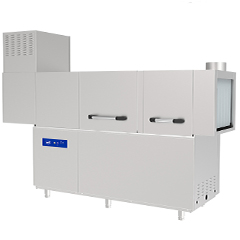
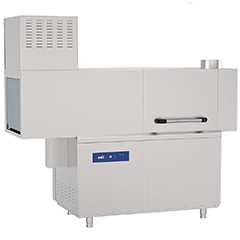
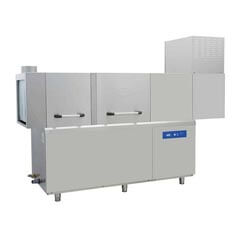
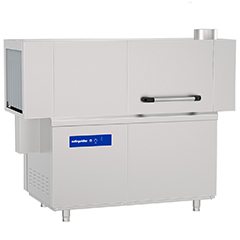
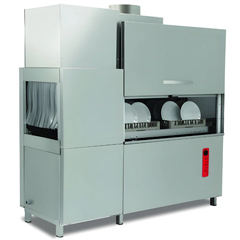
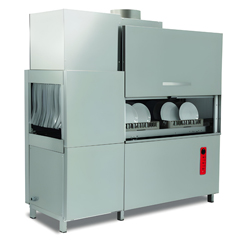
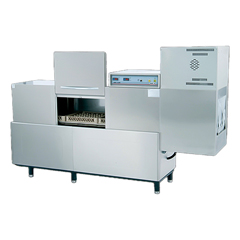
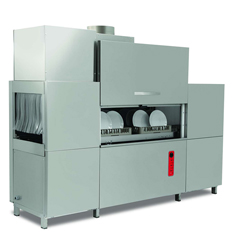
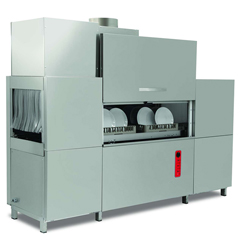
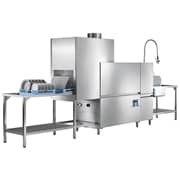
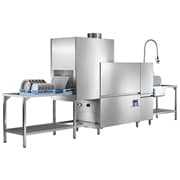
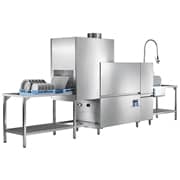
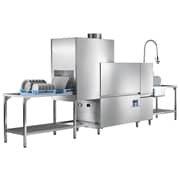
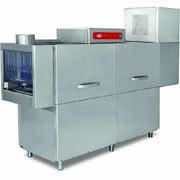
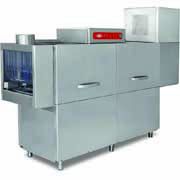
What Is a Conveyor Dishwasher and What Does It Do?
Conveyor dishwashers are high-capacity industrial cleaning machines that wash and rinse thousands of plates and glasses without manual handling, using a moving belt system that runs through the machine. They are specifically designed to turn dishwashing operations into a continuous production line in large facilities with nonstop foot traffic, such as hotels, hospitals, and large-scale cafeterias. When racks filled with soiled items enter at one end, they pass through separate pre-wash, main-wash, and hot-water rinse stations before emerging spotless at the other end. By eliminating the need for kitchen staff to bend down and lift repeatedly, these large systems enable businesses to meet the tableware demands of hundreds of guests within minutes, even during peak service hours.
Types of Conveyor Dishwashers
Rack Conveyor Dishwashers
Plates, glasses, and other serving items are arranged in transport racks. The racks move along the conveyor line and automatically pass through the washing and rinsing sections. The ability to load racks one after another ensures uninterrupted operation during busy periods.
These machines generally include a conveyor motor, wash pumps, a rinse system, and filters. Depending on the model, a pre-wash section, detergent and rinse-aid dosing system, drying unit, or heat-recovery system may be added.
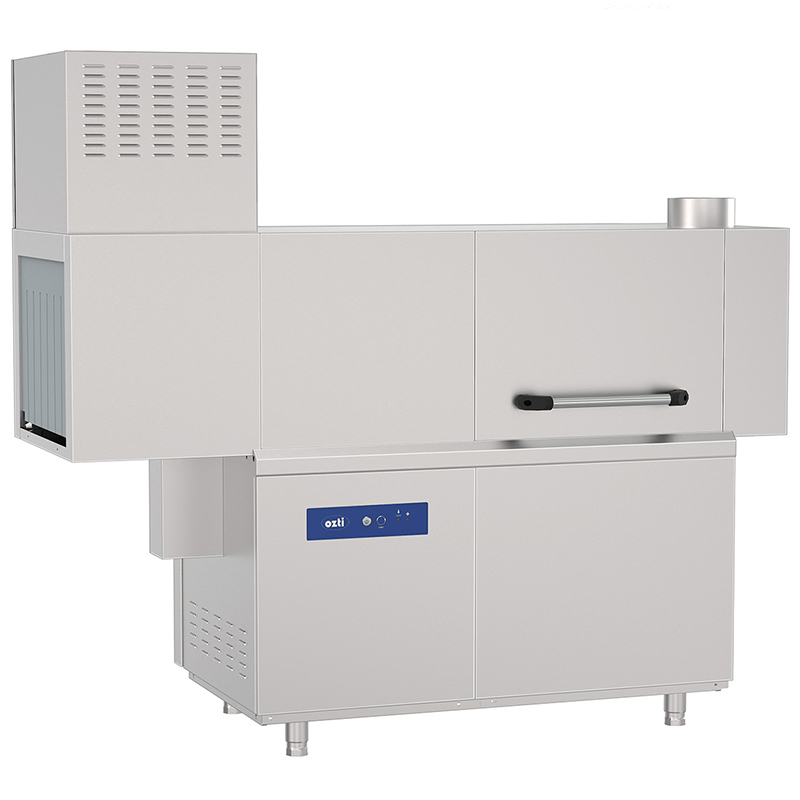
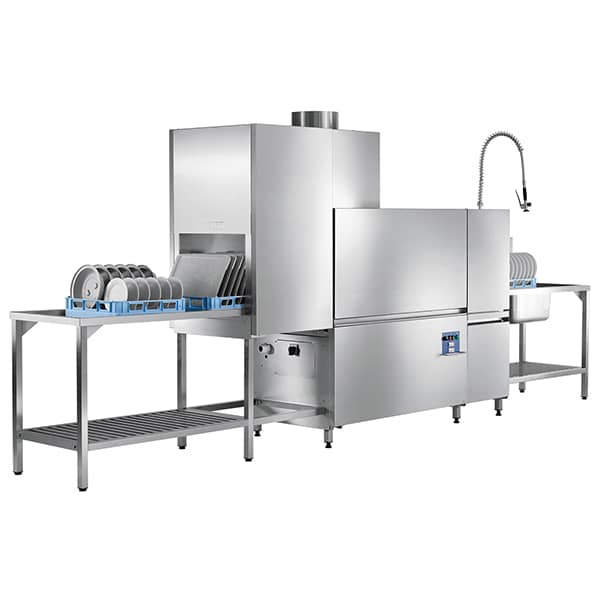
Flight-Type Dishwashers
Plates, trays, and bowls are placed directly on the conveyor belt without being loaded into racks. As they move along the belt, the items pass through the main-wash and rinse sections. These high-capacity machines are used in large cafeterias, hotels, hospitals, and catering kitchens.
The conveyor motor, wash pumps, filter system, and final-rinse section are the machine's core components. Depending on the model, the pre-wash section, drying tunnel, detergent and rinse-aid dosing system, and heat-recovery unit may be standard or optional. Heat-recovery models use the hot air leaving the machine to preheat the incoming water, reducing energy demand.
What Are the Advantages of Using a Conveyor Dishwasher?
Its greatest advantage is the unmatched operating speed it brings to large kitchen operations by rapidly washing thousands of plates on an automated conveyor without relying on manual labor. Kitchen staff simply place racks filled with soiled items at the machine's entry point, and the equipment handles every demanding stage internally, from pre-washing to rinsing with hot water. By preventing employees from repeatedly bending down and lifting heavy racks, the system greatly reduces physical fatigue in the dishwashing area. In busy hotel or hospital kitchens where traffic never stops, this continuous background workflow prevents items from piling up on counters and ensures that spotless tableware is ready for service immediately.
Most Popular Conveyor Dishwasher Models
The most popular conveyor dishwasher models on the market are high-capacity stainless-steel machines made by brands known for their durability in the commercial kitchen industry, including Öztiryakiler, Empero, İnoksan, and Hobart. When making such a major investment, purchasing managers at large hotels and hospitals pay close attention not only to price but also to how many thousands of plates the machine can wash per hour and how extensive the brand's spare-parts network is. Designed with right- or left-hand loading to suit the facility's utility layout, these conveyor systems play an important role in clearing large volumes of dishes quickly without exhausting staff, even during the busiest service periods. Models equipped with additional features such as drying tunnels and heat-recovery units are especially popular because they can significantly reduce a kitchen's electricity and water consumption over the long term.
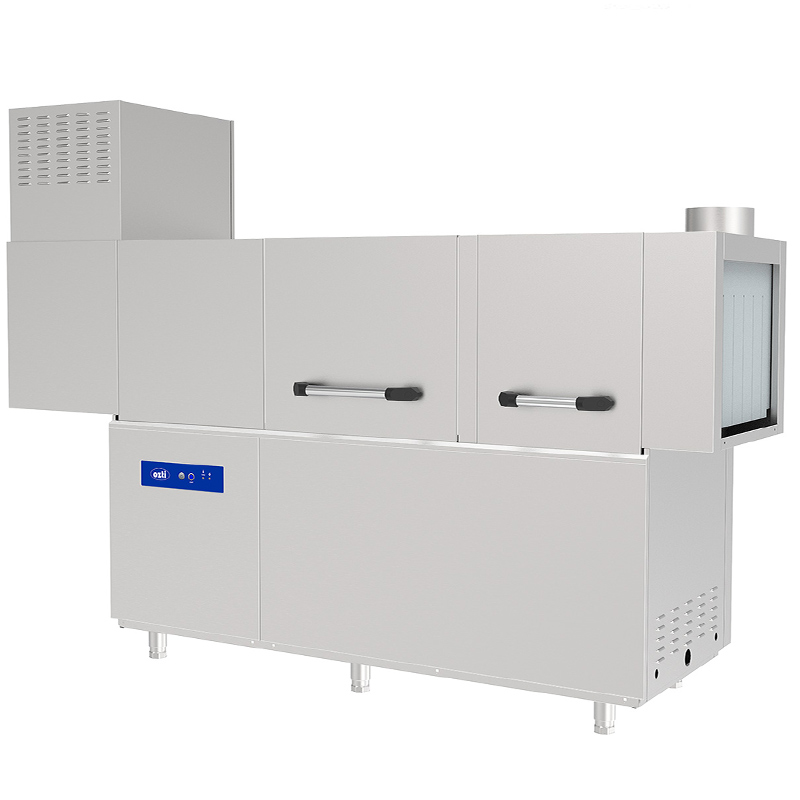
Öztiryakiler OBK 2000 Conveyor Dishwasher
With a washing capacity of 2130 plates per hour and a powerful drying unit, the Öztiryakiler OBK 2000 conveyor dishwasher is a high-performance commercial dishwasher. Made entirely of stainless steel, this three-phase machine turns dishwashing operations at high-traffic facilities into a continuous workflow with its moving conveyor system. Equipped with a rinse pump as standard, it uses only three liters of water per wash cycle, helping your business achieve significant savings on monthly operating costs. After rinsing soiled items with water at 85 degrees, the system immediately sends them through its integrated fan-assisted drying tunnel, ensuring that all porcelain and glassware is ready for the table within seconds without requiring additional hand drying.
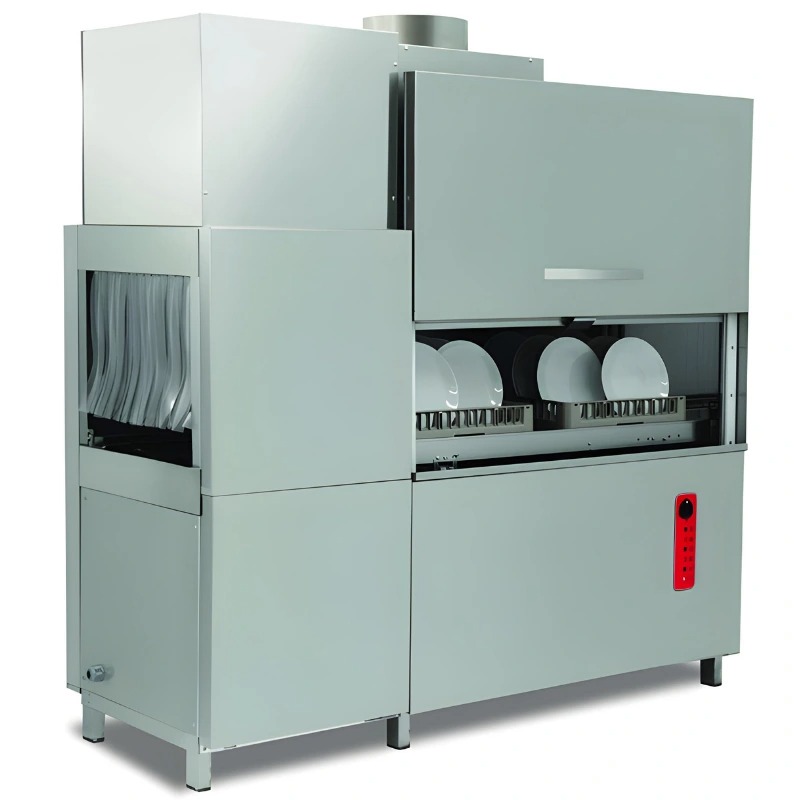
Empero EMP 2000 Conveyor Dishwasher
With the capacity to wash 2200 plates per hour and a standard drying tunnel, the Empero EMP 2000 conveyor dishwasher is a high-performance industrial dishwasher. Featuring an all-stainless-steel body and heating elements, this three-phase machine provides significant operational flexibility through its two-speed conveyor. A drain pump is included as standard, and after rinsing soiled items with water at 85 degrees, the machine transfers them directly to the drying tunnel, eliminating the need for additional hand drying. A magnetic door safety sensor prioritizes employee safety, while the included glass and plate racks help create a continuous flow of tableware even during your busiest service periods.
Öztiryakiler OBK 3000 Conveyor Dishwasher
With a washing capacity of 3000 plates per hour and a distinctive left-hand loading design, the Öztiryakiler OBK 3000 conveyor dishwasher is a powerful industrial dishwasher. Made entirely of stainless steel, this three-phase machine turns kitchen operations into a continuous conveyor workflow through its one-piece wash tank and built-in rinse pump. Using only three liters of water per wash cycle, it helps control operating costs and completes the rinse with thermostat-controlled water at 85 degrees. Immediately afterward, the high-powered fan-assisted drying tunnel prepares all washed porcelain and glassware for service within seconds, with no additional hand drying required.
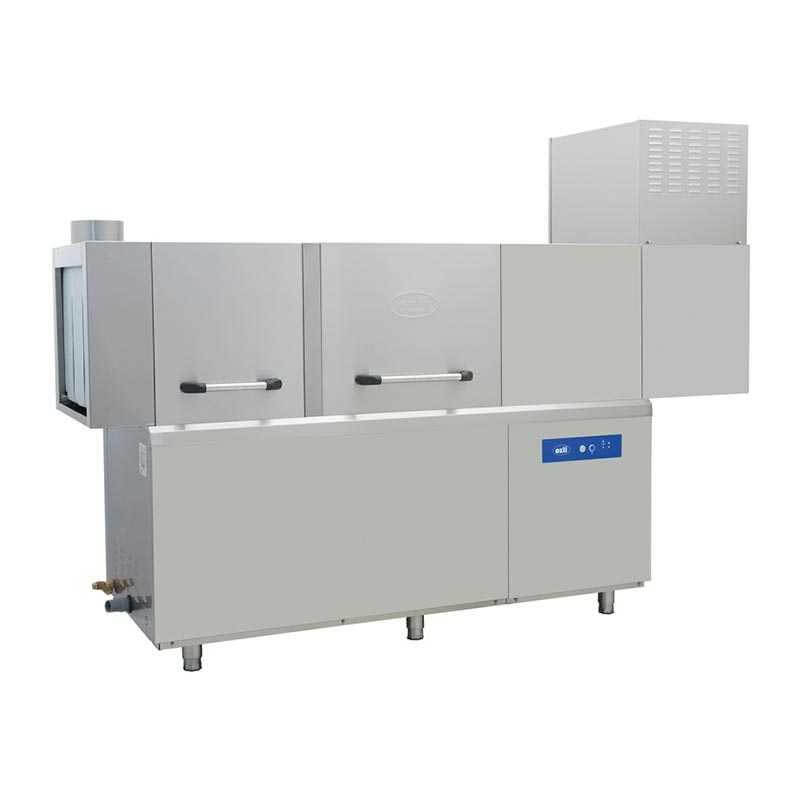
Empero EMP 3000 Conveyor Dishwasher
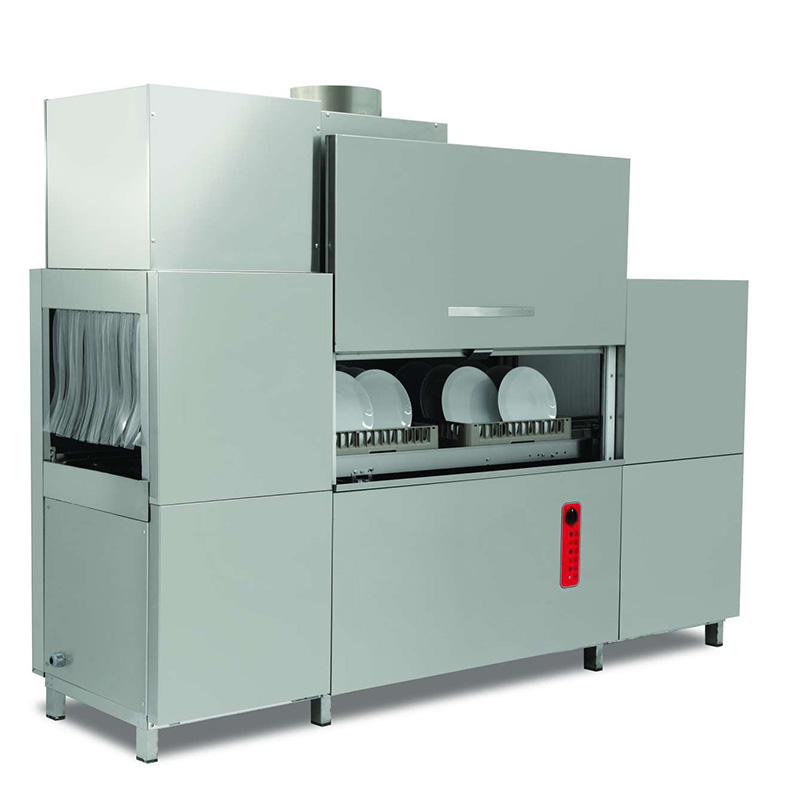
With a high washing capacity of up to 3300 plates per hour and an integrated pre-wash system that reduces the workload in large kitchens, the Empero EMP 3000 conveyor dishwasher is a powerful commercial dishwasher. Its conveyor offers two speed settings, allowing you to manage the dishwashing workflow flexibly according to current demand. Made entirely of stainless steel, this durable machine rinses soiled items with water at 85 degrees and then transfers them to the standard drying tunnel, eliminating the need for additional hand drying. With a magnetic door sensor designed around employee safety and dedicated racks supplied with the machine, your business can maintain a continuous flow of tableware even during the busiest service periods.
Conveyor Dishwasher Selection Guide by Business Type
When choosing the best model for your business, you should base your decision directly on daily customer volume and the physical size of your kitchen. If you operate a mid-sized hotel or cafeteria, a standard conveyor system capable of cleaning an average of 2,000 plates per hour will keep your dishwashing workflow running smoothly. However, if you manage a large hospital or resort serving thousands of people, investing in equipment with a pre-wash section and drying tunnel that can process more than 3,000 plates per hour is essential for preventing operational bottlenecks.
| Features | Öztiryakiler OBK 2000 Conveyor Dishwasher | Empero EMP 2000 Conveyor Dishwasher | Öztiryakiler OBK 3000 Conveyor Dishwasher | Empero EMP 3000 Conveyor Dishwasher |
|---|---|---|---|---|
| Washing Capacity (per hour) | 2130 Plates | 2200 Plates | 3000 Plates | 3300 Plates |
| Rinse Aid Pump | No | No | No | No |
| Detergent Pump | No | No | No | No |
| Drain Pump | No | Yes | No | Yes |
| Rinse Pump | Yes | No | Yes | No |
| Power | 48 kW | 48 kW | 59,1 kW | 48 kW |
| Height (cm) | 255 | 190 | 80 | 256,1 |
| Depth (cm) | 80 | 83,7 | 305 | 83,7 |
| Width (cm) | 188 | 200 | 188 | 200 |
| Weight (kg) | 320 | 317 | 420 | 405 |
| Supply Voltage | Three-phase | Three-phase | Three-phase | Three-phase |
| Rack Dimensions | 50x50 | 50x50 | 50x50 | 50x50 |
Conveyor Dishwasher Prices
Conveyor dishwasher prices vary according to the selected model's hourly washing capacity, motor power, and additional components such as a tunnel. Basic models that operate with only a conveyor system may be available at relatively affordable prices. Costs naturally rise, however, for large installations with a pre-wash section or capacities above 3,000 plates per hour. Rather than focusing solely on the initial purchase price, it is more sensible to calculate the machine's electricity and water consumption. Although additions such as a drying tunnel increase the upfront cost, they can quickly pay for themselves by making plates ready for service immediately during busy periods.
Conveyor Dishwasher Reviews
Reviews from professionals who manage large kitchens tend to focus on the physical workload removed from staff and the operating speed these industrial machines add to the kitchen. Operators of facilities with nonstop traffic, such as hotels and cafeterias, often say that the moving conveyor system completely eliminates the exhausting congestion in the dishwashing area. Those who install models with drying tunnels are particularly pleased that thousands of washed porcelain items are ready for service as soon as they leave the machine, without requiring additional drying. The most important advice experienced managers give new buyers is to look beyond the initial price tag and choose established brands whose spare parts are readily available and whose machines are compatible with the facility's utility infrastructure.
What Should You Consider When Buying a Conveyor Dishwasher?
When installing a large cleaning system of this kind, the first factors to consider are the venue's daily customer volume and the physical size of the dishwashing area. Choosing a slightly cheaper model whose hourly plate capacity cannot meet your busiest demand can bring the kitchen to an immediate standstill during peak service. When deciding whether the machine should load from the right or left, the location of the existing water connections should be a primary consideration. In addition, investing in an established brand that can dispatch technical support quickly and provides readily available spare parts is the safest way to protect your budget over the long term.
Why Is Stainless Steel Important in a Conveyor Dishwasher?
Because this large equipment is constantly exposed to hot water and powerful commercial detergents, stainless-steel construction is essential for years of reliable operation in a humid kitchen environment without corrosion. When ordinary metals are exposed to such corrosive chemicals and dense steam, they can begin rusting internally within a short time and permanently damage the machine's operating system. The material's smooth surface also helps prevent bacterial growth, allowing you to maintain the highest hygiene standards in your dishwashing area. By choosing a robust machine made entirely of stainless steel, you can operate confidently for many years without corrosion problems, even during your busiest working hours.
Are Pump Selection and the Boiler Heating Element Important in a Conveyor Dishwasher?
Yes. Choosing the correct pump and boiler heating element is extremely important if these conveyor systems are to handle large dish loads while operating in full compatibility with your utility infrastructure. If the mains water pressure is insufficient, a machine without a rinse pump cannot spray hot water onto the plates at the required pressure and may leave detergent residue behind. Because the boiler heating element is responsible for quickly raising the water temperature to 85 degrees and breaking down stubborn grease, an undersized element forces the machine to work unnecessarily long to heat the water. Components that are not selected for the actual operating requirements can increase monthly utility costs and seriously slow kitchen operations during peak order periods.
Does Using Detergent and Rinse Aid for Hard Water Extend the Life of a Conveyor Dishwasher?
Yes. In areas with high limescale levels, choosing chemicals formulated for the local water hardness protects the machine's internal components and can significantly extend its service life. Over time, calcium and magnesium in the mains water can form a thick layer of scale on components such as heating elements and pumps, greatly reducing heating performance. When the correct liquid products are added to the system, these harmful minerals are neutralized before they can adhere to surfaces, minimizing the risk of damage to stainless-steel parts. As a result, your kitchen team achieves spotless porcelain with every wash while you protect the business from unexpected repair expenses over the long term.
Water Hardness Levels and Their Meanings
| Water Hardness | Description |
|---|---|
| 30 °f and above | Very Hard Water / Very High Limescale |
| 20-30 °f | Hard Water / High Limescale |
| 10-20 °f | Slightly Hard Water / Low Limescale |
| 5-10 °f | Soft Water |
| 0-5 °f | Very Soft Water |
You can review our buying guide to choose the most suitable dishwasher for your business.
Our Videos
We provide detailed demonstration videos that let you see the real-world operating performance of the high-capacity industrial equipment featured on Mutbex. We understand how important it is to see the moving conveyor system and washing power of this large equipment for yourself before making a major investment decision for your facility. By watching our visual content, you can gain a much clearer understanding of how the models you prefer may improve the daily operating speed of your dishwashing area.
Conveyor Dishwasher Brands
The most trusted and widely preferred conveyor dishwasher brands in the commercial kitchen industry are Öztiryakiler, Empero, Hobart and İnoksan. These respected manufacturers draw on many years of field experience to develop robust stainless-steel equipment capable of handling the dishwashing demands of very large facilities. To prevent kitchen operations from being disrupted by a possible breakdown, facility managers view choosing these established names—with readily available spare parts and extensive service networks—as an important investment decision. Thanks to the conveyor systems developed by these proven brands, even the circulation of thousands of plates can be washed and prepared for service in a smooth workflow without physically exhausting staff.
Related Blog Posts
Maintenance and Cleaning of Commercial Dishwashers
Commercial Dishwasher Problems and Solutions

How Are Commercial Dishwashers Used?
Frequently Asked Questions (FAQ)
Which Conveyor Dishwasher Model Is Right for My Business?
Answer: When choosing the most suitable conveyor dishwasher for your business, base your decision directly on the physical size of your kitchen and your daily guest volume. If you manage a mid-sized cafeteria or hotel, a standard conveyor system capable of cleaning approximately 2,000 plates per hour can comfortably handle your dishwashing workflow. If you operate a much larger facility with heavier traffic, however, investing in equipment with a pre-wash section and drying tunnel that can process more than 3,000 plates per hour is important for preventing operational bottlenecks. When finalizing your purchase, choosing right- or left-hand loading to match the direction of the existing water connections can also prevent additional renovation costs during installation.
What Should the Rinse Temperature Be in a Conveyor Dishwasher?
Answer: The ideal rinse-water temperature for conveyor dishwashers used in commercial kitchens should be between 80 and 85 degrees. The machine's boiler heating element raises the water to this high temperature, dissolving stubborn residue on plates and delivering the high standard of hygiene required by your business. This final hot-water stage also helps moisture evaporate from washed items within seconds, preventing staff from losing time on additional hand drying. Thermostatically controlled systems inside the machine maintain this ideal temperature range during every wash cycle, helping your workflow run smoothly even at the busiest service times.
How Much Water and Energy Does a Conveyor Dishwasher Use?
Answer: While cleaning thousands of plates, these large high-capacity conveyor systems consume water and electricity according to their motor power and tank volume. Professional conveyor models generally use an average of around three liters of water per rack, while their total electrical power ranges from 40 to 60 kilowatts depending on the machine size and drying tunnel. Although the boiler and tank heating elements require substantial energy to keep the water continuously at the level needed for washing and rinsing, modern designs balance water and heat efficiently to reduce a business's monthly utility costs.
Is Rinse Aid Necessary in a Conveyor Dishwasher?
Answer: No. Rinse aid is not required for the machine to operate, but its use is recommended for faster drying and fewer water spots. Rinse aid dispensed during the final rinse improves results, especially on glasses, cutlery, and stainless-steel items. The dosage should be set according to water hardness and the manufacturer's specified settings.
What Is the Difference Between a Conveyor Dishwasher and a Domestic Dishwasher?
Answer: The clearest differences are capacity and operating method. A domestic machine washes the items loaded into its rack in a single program. In a conveyor machine, plates, glasses, and trays move along a continuous line: soiled items are loaded at one end while washed items are collected at the other. These machines are intended for the heavy dishwashing volumes found in hotels, hospitals, large cafeterias, and catering kitchens. Domestic appliances work with standard kitchen utilities, whereas conveyor models may require dedicated electrical, water, drainage, and ventilation arrangements depending on their power rating.
Does a Conveyor Dishwasher Dry the Dishes?
Answer: Yes. Models equipped with a drying tunnel dry the dishes at the end of the line. In this section, hot air is blown by a fan onto the rinsed plates and glasses. Less water remains on the items when they leave the machine, so they can be reused quickly. If there is no drying tunnel, the dishes need to drain for a while on the exit table. A few remaining droplets on plastic containers are normal.
Which Detergent and Rinse Aid Should Be Used in a Conveyor Dishwasher?
Answer: A low-foaming commercial machine detergent and a compatible rinse aid should be used in conveyor dishwashers. Hand-washing liquid creates excessive foam inside the machine, which can interfere with water spraying and washing results. If the machine has a liquid-chemical pump, liquid products are used; solid detergent requires a separate dosing unit. It is important to check the label when washing aluminum trays and pans because not every detergent is suitable for this material. A service technician sets the dosage according to the water hardness.
Can Domestic Dishwasher Detergent Be Used in a Conveyor Dishwasher?
Answer: No. Domestic tablets, capsules, and gel detergents are not suitable for conveyor machines. These machines complete washing in a short time and receive detergent through a dosing system. A domestic tablet may not dissolve completely within that period, and it is not possible to regulate the correct amount for every wash. Hand-washing liquid creates excessive foam and reduces the machine's washing performance. Conveyor machines should use low-foaming commercial detergent.
What Does the Drain Pump Do in a Conveyor Dishwasher, and Is It Required?
Answer: No. A drain pump is not required in every conveyor dishwasher. The pump sends dirty water from the wash tank to the drain line. If the drainpipe is higher than the machine outlet, the water cannot drain by gravity and a pump is required. If there is a floor drain close to the machine, the water can flow away by gravity and a model without a pump may be sufficient. Before purchase, a service technician should inspect the location and height of the drain.
Can Rinse Aid Be Added Manually to a Conveyor Dishwasher?
Answer: No. Pouring rinse aid into the machine's tank by eye is not appropriate. Rinse aid must be introduced gradually and consistently into the final-rinse water. It is difficult to maintain the correct dosage when adding it manually; one dose may be too high and another too low. Too much leaves marks on glasses, while too little is insufficient for drying. A rinse-aid pump performs this task. If the machine does not have one, a service technician can install and calibrate an external pump.
Is a Conveyor Dishwasher Suitable for Cafés, Bars, and Restaurants?
Answer: Yes, provided that the business has a high volume. In large restaurants that use hundreds of plates and glasses each day, a conveyor machine reduces the workload. This capacity would be excessive for a small ten-table café, while a glasswasher may be sufficient for a bar that serves only drinks. Before buying a conveyor model, confirm that it will fit in the kitchen. The electrical supply and drain connection should also be prepared before the service team arrives.
Does a Conveyor Dishwasher Have a Rinse Pump?
Answer: Yes. Many conveyor models have a rinse pump, but this component is not standard on every machine. The pump sends final-rinse water to the spray arms at sufficient pressure. If the pressure is too low, the edges of large plates may not be rinsed properly. Some machines rinse using mains pressure directly. If the kitchen's water pressure is low or fluctuates during the day, a model with a pump will operate more reliably. When selecting a product, check the technical specifications to confirm whether a rinse pump is included.
How Should the Fresh-Water and Wastewater Connections of a Conveyor Dishwasher Be Planned Without Obstructing Other Commercial Kitchen Equipment?
Answer: Planning should not begin before the machine dimensions and the manufacturer's connection drawing have been reviewed. The fresh-water shutoff valve should remain accessible without moving the machine. The wastewater line should take the shortest route to the floor drain, based on the location of the machine's drain outlet. Pipes and hoses must not cross walkways or block the door or maintenance clearance of adjacent equipment. Before the layout is finalized, the machine service team and plumber should review all connection points on the same plan.
How Should the Fresh-Water and Wastewater Connections of a Conveyor Dishwasher Be Planned Without Obstructing Other Commercial Kitchen Equipment?
Answer: This work should not be left until after the machine arrives in the kitchen. First, place the equipment's technical drawing over the counter layout. Is the valve within easy reach? Does the drain hose interfere with the foot of another machine? These details should be checked on the plan. Where possible, the fresh-water line should approach from the side of the machine. The wastewater hose should run to the nearest drain without being extended. Pipes should not be routed behind an oven or cooking range. Once the positions are established, the plumber takes measurements and the service team confirms that the connections are compatible with the machine.
How Much Can a Double-Wall Insulated Conveyor Dishwasher Reduce Heating-Element Run Time by Retaining the Water Temperature in the Tank?
Answer: There is no single percentage that applies to every machine. Double-wall construction slows heat loss from the machine and keeps the water hot for longer, so the heating element operates less frequently to restore the temperature. A large-tank machine operating in a cold kitchen will not produce the same result as a smaller model. The most reliable comparison is to examine the catalogued hourly energy consumption of two machines with similar capacities.
How Much Can a Double-Wall Insulated Conveyor Dishwasher Reduce Heating-Element Run Time by Retaining the Water Temperature in the Tank?
Answer: Automatic pumps integrated into the machine significantly reduce staff workload during the busiest service periods. When thousands of plates are moving through the conveyor each hour, requiring employees to monitor chemical containers constantly and add liquids manually slows the entire workflow. Automatic pumps eliminate this intervention by drawing exactly the required amount of detergent and rinse aid into the system according to the water volume. Connected directly to the system, these dosing pumps deliver the precise amount of liquid required into the tank and maintain consistent washing quality. This allows employees to focus on loading soiled racks onto the conveyor and sending spotless tableware directly to the tables instead of handling heavy chemical containers or adjusting foam levels. The equipment's accurate dosing also eliminates unnecessary detergent consumption, creating meaningful savings in monthly operating expenses.