 Track Order


Electric Pizza Ovens
Categories
Selected Filters
{{ FILTERS.VARIANTS.TYPE1_NAME }}
{{ FILTERS.VARIANTS.TYPE2_NAME }}
Brand
Model
{{ FILTER.NAME }}
Price
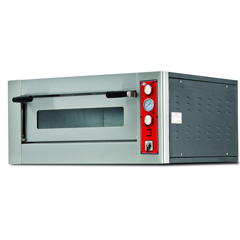
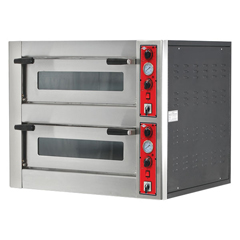
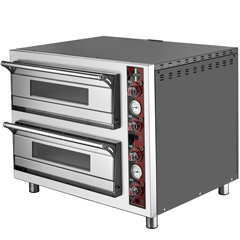
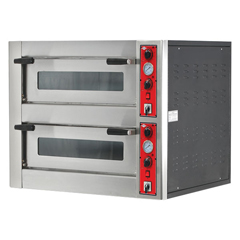
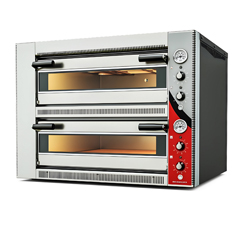
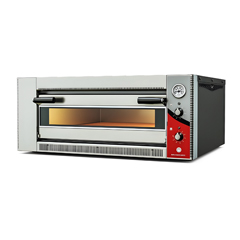
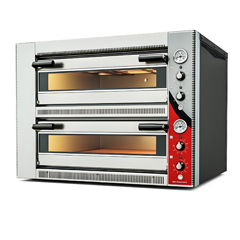
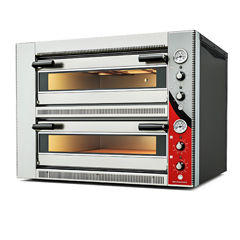
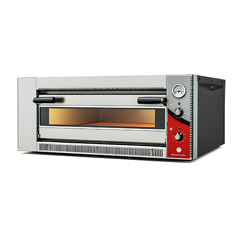
What Is an Electric Pizza Oven and What Does It Do?
Electric pizza ovens are commercial kitchen appliances that heat with heating elements and bake pizza at high temperatures. They are the first option considered by businesses whose kitchens do not have a natural-gas line. Because you only need to plug them in, you do not have to deal with a separate gas installation. You can lower or raise the heat from the deck and ceiling independently. They heat up quickly and maintain their temperature throughout service. In models with fireclay stone decks, the bottom of the dough cooks in direct contact with the stone, keeping the base crisp. If the menu includes lahmacun and pide, there is no need to buy a second appliance for them. Since they are manufactured with multiple decks, they save vertical space in narrow kitchens. Models with higher kilowatt ratings require a 380 V three-phase supply, so have your kitchen's electrical line checked before ordering.
What Are the Advantages of Using an Electric Pizza Oven?
Electric pizza ovens offer your business the advantage of fast, standardized production without major infrastructure costs. Unlike traditional wood-fired models, these appliances do not require the challenging chimney installations or special ventilation projects associated with those ovens. The feature that makes the greatest difference to kitchen staff is the ability to control the deck and ceiling temperatures completely independently. This independent control eliminates the risk of burning the bottom of the dough even during the busiest periods of order traffic and enables you to serve every guest in the dining area products baked to the same consistent standard.
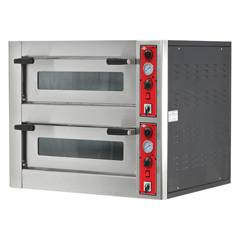
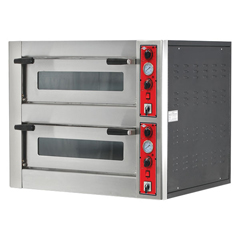
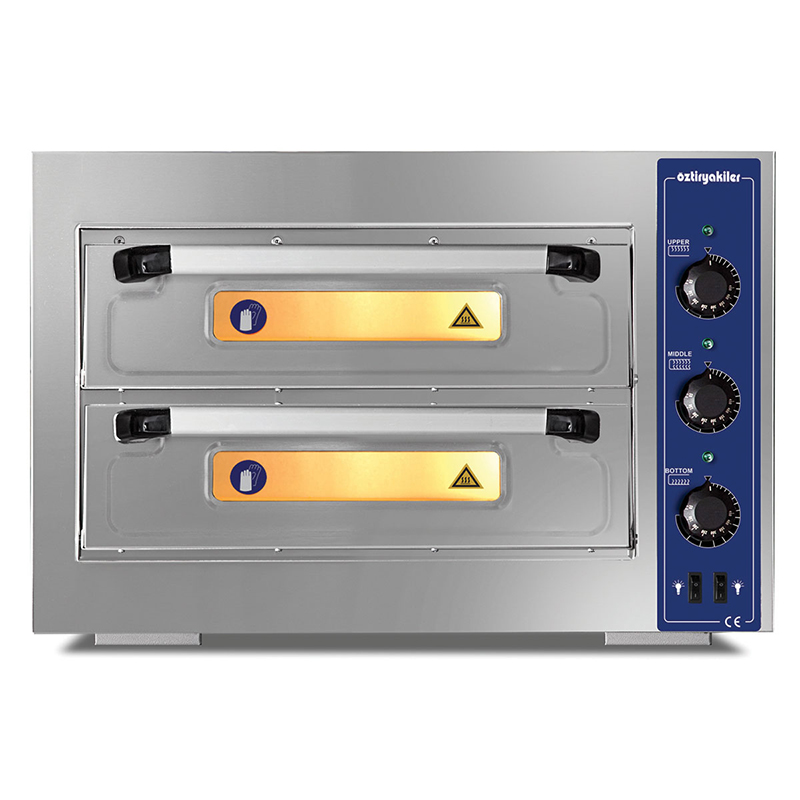
Öztiryakiler P5050/02 Electric Pizza Oven
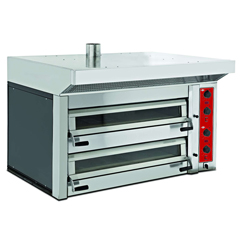
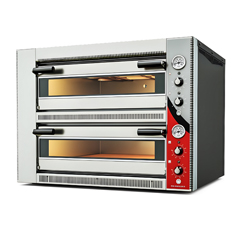
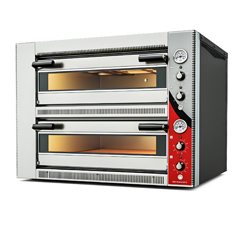
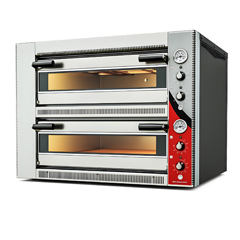
This double-deck model can produce 8 pizzas at the same time. Each deck bakes 4 pizzas with a diameter of 25 cm, and the internal dimensions of each deck are specified as 50x50x10 cm. Its temperature range of 50 to 500 degrees means it can be used for lahmacun and pide as well as pizza. Because the heat of each deck can be adjusted separately, you can prepare different products simultaneously. It has an electrical power rating of 6 kW and requires a 380/400 V three-phase supply, so have the line in your kitchen checked before ordering. Its external dimensions are 760 x 755 x 510 mm and its net weight is 65 kilograms, allowing it to fit on a counter even in compact kitchens. Being manufactured in Türkiye provides an advantage in terms of spare parts and technical service. Its capacity is suitable for medium-sized pizzerias and restaurants with busy evening service. You can review the product's technical details and current price on Mutbex.com.
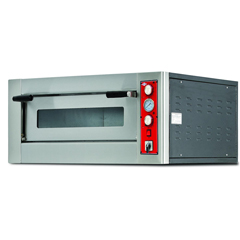
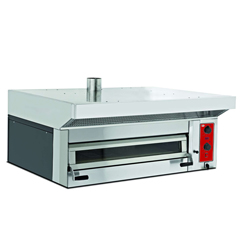
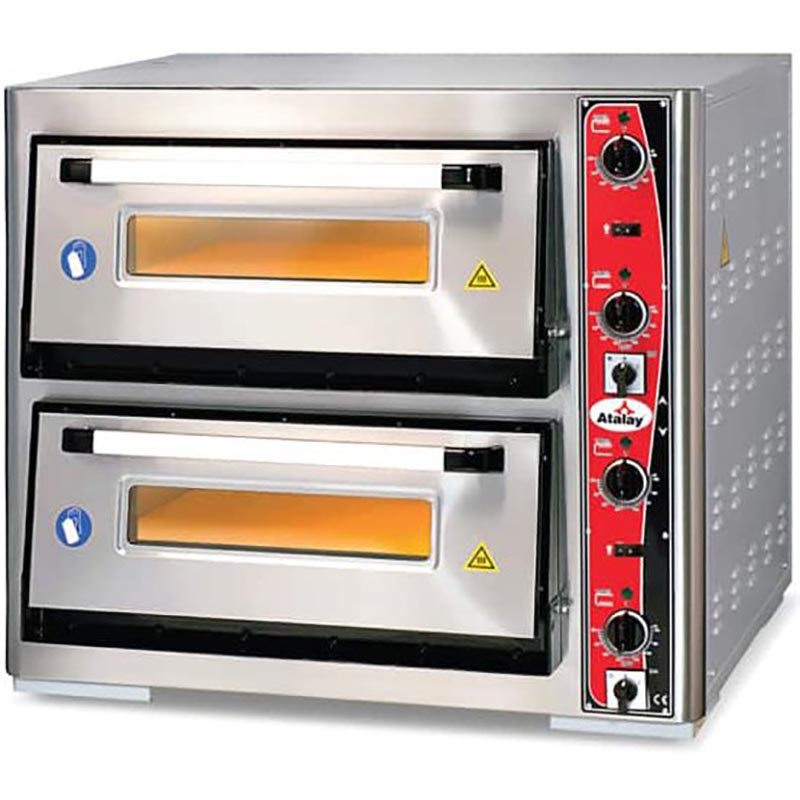
Atalay APF-62/2 Electric Pizza Oven
This double-deck model can bake 8 pizzas at the same time. Its internal chamber measures 62 x 62 x 15 cm, providing a large baking area on each deck. The baking stone is manufactured by Atalay, and because it cooks the underside of the dough directly, it produces a crisp base. The upper and lower thermostats of each deck operate separately, so you can bake pizza on the upper deck while preparing lahmacun below. The internal insulation is designed to withstand high temperatures, reducing heat loss throughout service. Interior lighting allows you to monitor the product without opening the door. The appliance draws 10 kW and operates at 400 V; before ordering, ask an electrician whether your kitchen's electrical line is suitable. Its external dimensions are 890 x 720 x 760 mm and it weighs 144 kilograms, so positioning it on the floor or on a stand is more appropriate than placing it on a counter. You can review the product's technical details and current price on Mutbex.com.
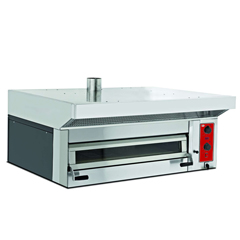
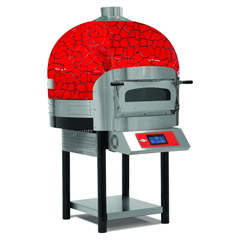
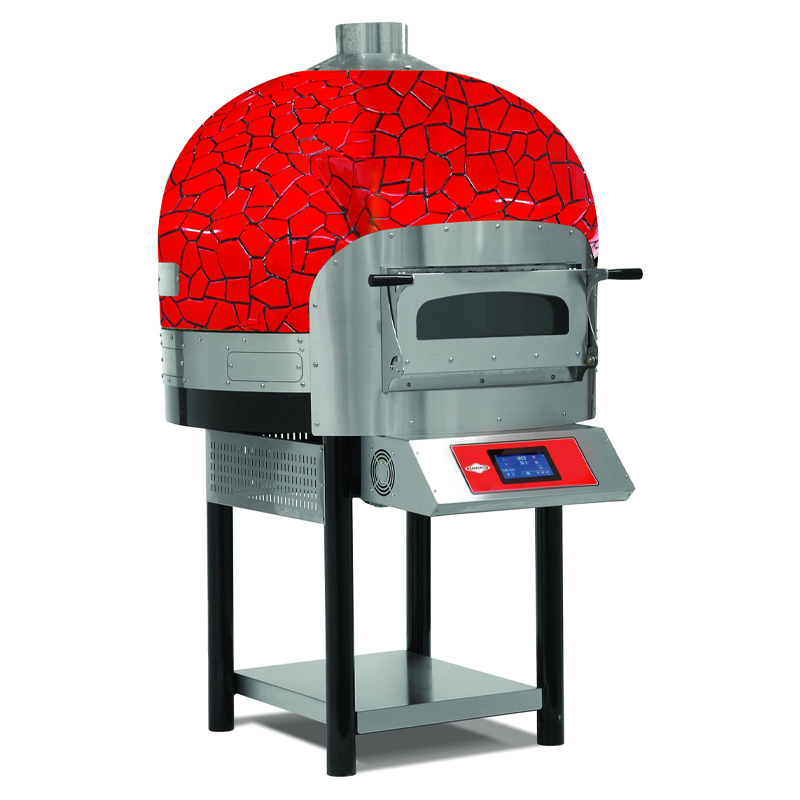
Empero SPO-01/D Digital Electric Rotating-Deck Pizza Oven
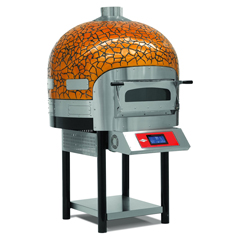
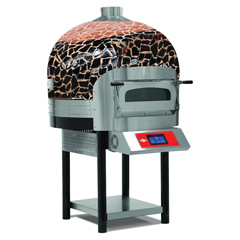
This high-capacity model can produce up to 75 pizzas per hour with its rotating deck. The refractory deck stone rotates during baking, ensuring that every part of each pizza is cooked evenly. The stone has a diameter of 100 cm and holds 6 pizzas with a diameter of 30 cm at the same time. The temperature can be adjusted between 0 and 400 degrees, and the baking time can also be set digitally. A 7-inch colour LCD panel and internal temperature display allow you to monitor the oven without opening its door. The internal chamber is stainless steel and has a height of 17 cm. The appliance draws 17 kW and requires a 400 V three-phase supply; the cable cross-section must be 5x4 mm². Its dimensions are 120 x 138.4 x 200 cm and it weighs 331 kilograms, so a separate installation area must be planned. It is designed for pizzerias with high delivery volumes and chain businesses. You can review its technical details and current price on Mutbex.com.
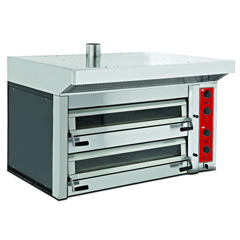
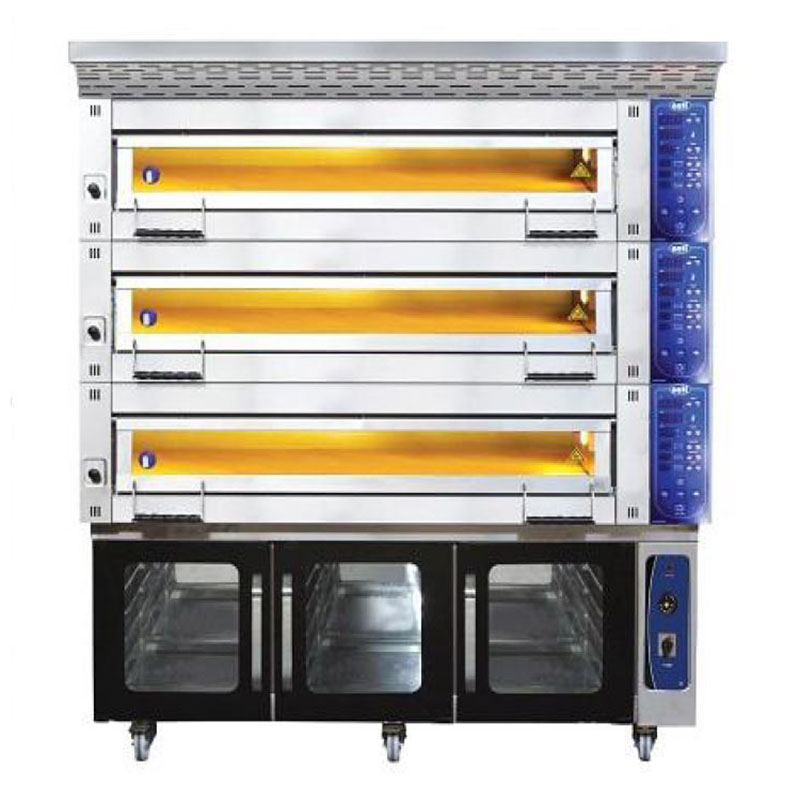
Öztiryakiler MT1200 Multi-Purpose 3-Deck Electric Oven
This model combines pastry production in one appliance with its three-deck structure and proofing cabinet. Each deck accommodates 4 trays measuring 40 x 60 cm, and the internal dimensions are 124 x 84 x 18 cm. The proofing cabinet below holds 15 trays measuring 40 x 80 cm, so you can proof and bake the dough in the same unit. The cabinet has a power rating of 3 kW and operates at 220-240 V. Total oven power is 31.5 kW; each deck draws 10.5 kW, and a 400 V three-phase supply plus neutral is required. Because these ratings require substantial electrical infrastructure, have your installation checked by an electrician before ordering. Its external dimensions are 166 x 110 x 205 cm and it weighs 700 kilograms, so the installation location must be determined in advance. It is designed for hotel kitchens, pastry shops, and mass-production facilities that prepare bread, pide, pastries, and oven dishes alongside pizza. You can review its technical details and current price on Mutbex.com.
Most Popular Electric Pizza Oven Models
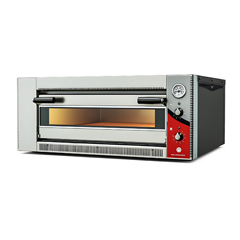
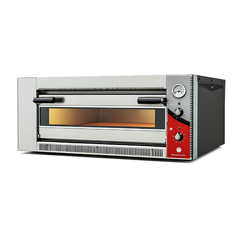
Electric ovens are generally selected according to capacity and the kitchen's electrical infrastructure. Double-deck models lead the list because their ability to produce 8 pizzas at once makes them the standard choice for medium-sized businesses. The Öztiryakiler 8890.P5050.02 is a prominent model in this group; it draws 6 kW, requires a 380/400 V three-phase supply, and fits on a counter with its weight of 65 kilograms. The Atalay APF-62/2 offers a larger baking area with internal chamber dimensions of 62 x 62 x 15 cm, as well as its own baking stone and independent upper and lower thermostats. For high-capacity operations, Empero's digital rotating-deck model is preferred; it produces up to 75 pizzas per hour and ensures even baking at every point as the deck rotates. Kitchens that prepare bread and pastries alongside pizza use three-deck ovens with proofing cabinets, such as the Öztiryakiler MT1200. Compact single-deck models holding 2-4 pizzas meet the needs of cafes and small restaurants. You can compare electric pizza oven models by capacity and power rating on Mutbex.com.
Electric Pizza Oven Selection Guide by Business Type
When choosing an electric oven, the first question is how many pizzas you produce each day, and the second is how much load your kitchen's electrical line can carry. For domestic use or one pizza at a time, compact countertop models are sufficient and operate from a standard socket. In cafes, single-deck appliances holding 2-4 pizzas can handle the day's service. Small and medium-sized restaurants continue production throughout evening service, so they move to single- or double-deck models holding 4-8 pizzas. Double-deck ovens are the standard choice in pizzerias; because each deck's heat can be adjusted separately, you can bake pizza above while preparing lahmacun below. Businesses with high delivery volumes choose rotating-deck or conveyor systems, which can produce more than 75 pizzas per hour. Hotel kitchens and pastry shops that prepare bread, pastries, and oven dishes alongside pizza use multi-deck models with proofing cabinets. Higher power ratings require a 380/400 V three-phase supply, so have your installation checked by an electrician before ordering. Businesses seeking a crisp base choose stone-deck models, while those wanting softer dough prefer metal-deck models.
|
Atalay APF-62/2 Electric Pizza Oven |
Öztiryakiler P5050/02 Electric Pizza Oven |
Empero SPO-01/D Digital Electric Rotating-Deck Pizza Oven |
Öztiryakiler MT1200 Multi-Purpose 3-Deck Electric Oven |
|
|---|---|---|---|---|
| Number of Decks | Double-Deck | Double-Deck | Single-Deck | Three-Deck |
| Pizza Capacity | 8 Pizzas | 8 Pizzas | 6 Pizzas | 20 Pizzas |
| Height (cm) | 76 | 51 | 200 | 205 |
| Depth (cm) | 89 | 755 | 138.4 | 110 |
| Width (cm) | 72 | 76 | 120 | 166 |
| Weight (kg) | 144 | 65 | 331 | 700 |
| Supply Voltage | Three-Phase | Three-Phase | Three-Phase | Three-Phase |
| Operating Type | Electric | Electric | Electric | Electric |
Electric Pizza Oven Prices
The first factors determining the price of an electric oven are the number of decks and pizza capacity. There can be a several-fold difference between a single-deck countertop appliance and a three-deck system with a proofing cabinet. The second determining factor is the appliance's power draw. A double-deck model drawing 6 kW and a multi-purpose oven drawing 31.5 kW are not in the same segment. Rotating-deck models and appliances with digital panels are in the upper price range because of their mechanisms. Stone-deck ovens are slightly more expensive than models with metal surfaces. With brands such as Öztiryakiler, Atalay, and Empero, the price reflects material quality, warranty coverage, and the service network. For models that require a three-phase line, it is useful to include electrical installation costs in the total budget. You can follow current prices and payment options on the product pages.
Electric Pizza Oven Reviews
Electric oven reviews most frequently discuss heating time and whether the temperature remains stable throughout service. When reading reviews, it is more useful to look at comments from businesses with order volumes similar to yours. Evaluate reviews of single-deck and double-deck models separately in terms of capacity, because their daily use is not comparable. Independent upper and lower thermostats are a feature frequently highlighted by businesses whose menus include lahmacun and pide. For models requiring a three-phase line, also examine installation reviews to learn how much additional electrical work cost. Ease of cleaning and a removable deck are the two subjects that receive the most feedback in daily use. Reviews of Öztiryakiler and Atalay generally focus on durability, warranty, and service support. You can read user reviews on the product pages and share your own experience.
Electric Pizza Oven Brands
Choosing an electric oven brand generally involves balancing service support and budget. In domestic manufacturing, Öztiryakiler, Atalay, Empero, Remta, Şengün, Silverinox and Vosco are leading names. These brands offer the advantage of extensive technical-service networks and rapid access to spare parts. In the event of a fault, this often determines the difference between one day and one week of downtime. Italian-made Sirman and Ariete are preferred for professional baking. Zanussi is also among the European brands listed in the catalogue. Venarro, Best For and GMG are frequently considered by businesses seeking value for money. When deciding, focus less on the brand name and more on the model's kW rating, warranty coverage, and whether the service network operates in your city. You can compare electric pizza oven brands and models on Mutbex.com.
What Should You Consider When Buying an Electric Pizza Oven?
The electrical line comes first. Small countertop models operate at 220 V, while ovens with higher kW ratings require a 380/400 V three-phase supply. Show the power information on the product page to your electrician; if the circuit breaker or cable cross-section is inadequate, have it replaced before the appliance arrives. Your daily order volume is the key measure for capacity. An oven with insufficient capacity will create a bottleneck during evening service, while excess capacity means unnecessary expenditure from the first day. If you also prepare lahmacun and pide, look for a model with independently controlled upper and lower thermostats. Appliances capable of exceeding 400 degrees produce better results in commercial use. The deck material directly affects baking results: a stone deck produces a crisp base, while a metal surface leaves the dough softer. Do not place ovens weighing more than one hundred kilograms on a counter; use a stand or position them directly on the floor. Before ordering, also ask how long the warranty lasts and whether service is available in your city.
Frequently Asked Questions (FAQ)
How Long Does an Electric Pizza Oven Take to Heat Up?
For most models, 15-20 minutes is sufficient. The time varies according to the appliance's power and number of decks, and compact single-deck ovens become ready more quickly. Stone-deck models may require a little more time because the stone itself must reach the correct temperature. Switch on the oven before service and include this period in your preparation time. Keeping it at a low temperature during the day instead of repeatedly switching it off and on saves time and prevents a quality difference in the first order.
Can Lahmacun and Pide Be Baked in an Electric Pizza Oven?
Yes, all thin-dough products can be baked in these ovens. On models with a broad temperature range, increasing the temperature and shortening the baking time allows lahmacun to be ready within a few minutes. Appliances with independently controlled upper and lower thermostats can bake pizza on the upper deck while preparing lahmacun below. Businesses offering both products therefore avoid having to buy a second oven. In stone-deck models, the underside of pide also bakes evenly without drying out the dough.
Why Does Dough Not Become Crisp in an Electric Pizza Oven?
The most common reason is that the deck temperature is not high enough. On models where the upper and lower heat can be adjusted separately, try setting the deck slightly higher than the upper heating element. The second reason may be the deck material, as ovens with metal surfaces naturally leave the dough softer. The same problem occurs when pizza is loaded before the oven is fully heated, so wait until the stone has reached the correct temperature. Excess moisture in the dough and the amount of sauce used are also factors that soften the base.
How Should the Fireclay Stone in an Electric Pizza Oven Be Cleaned?
Cleaning should begin only after the oven has cooled completely. Remove flour and burnt pieces of dough from the surface using a dry brush or a suitable scraper. Because stone is porous, detergent or washing with plenty of water is not recommended; chemicals penetrate the material and can transfer to food baked later. Pouring water onto a hot stone creates a sudden temperature difference and may cause cracking. This process is much more practical on models with removable decks.
Is a Three-Phase Line Essential for an Electric Pizza Oven?
This depends entirely on the oven's power draw. Some small models operate at 220 V, but you should not assume that the appliance can be connected directly to an existing socket. Requirements change as power increases, and models rated at 6 kW and above generally need a 380/400 V three-phase supply. Before ordering, show the voltage and kW values on the product page to your electrician. If the existing line cannot handle the load, the oven may arrive in the kitchen but cannot be put into operation.
Do Electric Pizza Ovens Consume a Lot of Electricity?
Consumption depends on the appliance's kW rating and its daily operating time. A double-deck model draws between 6 and 10 kW, while three-deck multi-purpose ovens can reach 31.5 kW. The heating elements work hardest during warm-up, and the load decreases once the set temperature is maintained. Every time the oven is switched off and heated again, additional consumption is added to the bill. A well-insulated body retains heat, which also keeps monthly operating costs lower.
Can an Electric Pizza Oven Be Placed on a Counter?
Yes, models weighing less than 100 kilograms can sit comfortably on a counter. A double-deck appliance weighing 65 kilograms does not cause problems on a standard commercial kitchen counter. Once the weight exceeds 144 kilograms, a stand or direct floor placement is safer. A frequently overlooked issue is the space occupied by the oven. The appliance may fit on the counter, but the aisle can become almost completely blocked when the door opens. When determining its position, add the required door clearance to the body dimensions.
Does an Electric Pizza Oven Require a Chimney?
A mandatory chimney line like the one required for gas models is not necessary. Electric appliances do not produce combustion gases, so an exhaust chimney is not required. However, heat, steam, and odours are still released during baking, so installing an extraction hood above the appliance makes the working environment more comfortable. Small kitchens with poor ventilation heat up quickly, affecting staff. It is useful to assess the venue's ventilation before installation.
Does an Electric Pizza Oven Operate at 220 V or on a 380/400 V Three-Phase Supply?
Both are possible; the determining factor is the appliance's power. Small countertop models and low-kW single-deck ovens operate on a 220 V single-phase line and plug into a standard socket. Once power exceeds around 6 kW, a 380/400 V three-phase supply is required, and most double-deck and multi-deck models fall into this group. Compare the kW and voltage information on the product page with the existing line in your kitchen. If the cable cross-section or circuit breaker is inadequate, the appliance cannot be commissioned even after delivery.
Can an Electric Pizza Oven Reach a Sufficient Temperature for Neapolitan-Style Pizza?
Most standard models cannot; specially manufactured ovens are required. For Neapolitan-style pizza, the deck temperature is kept at around 430 degrees and the dome temperature close to 480 degrees, allowing the pizza to bake in 60-90 seconds. Most electric ovens on the market remain between 350 and 400 degrees, resulting in a baking time of 4-5 minutes. Electric models capable of reaching 500 degrees are also available and can produce results close to the Neapolitan style. If this style is on your menu, always ask about the appliance's maximum temperature and the temperature the deck can reach before purchasing.
What Pizza Capacity Should I Choose for My Business?
The determining factor is not the daily total but how many pizzas must enter the oven during the busiest hour. In a business selling 40 pizzas a day, half of the orders may be concentrated within two or three evening hours. If orders are spread throughout the day, a model holding 2-4 pizzas will be sufficient. If production never stops during evening service, you will need an appliance holding 6-8 pizzas or a double-deck model. Remember that capacity ratings depend on pizza diameter: a deck that holds four 25 cm pizzas will hold fewer 30 cm pizzas.
What Is the Benefit of Separate Upper and Lower Heat Controls in an Electric Pizza Oven?
They allow the underside of the dough and the toppings to be controlled independently. When the deck is set higher than the upper heating element, the dough becomes crisp without burning the cheese. In the opposite situation, when the upper heat is set too high, the toppings darken while the base remains undercooked. These controls also make it possible to prepare different products in the same oven; for lahmacun, you can increase the upper heat and shorten the baking time. Because the settings remain fixed when staff change, product quality stays consistent from one shift to the next.