 Track Order


Account
Cart
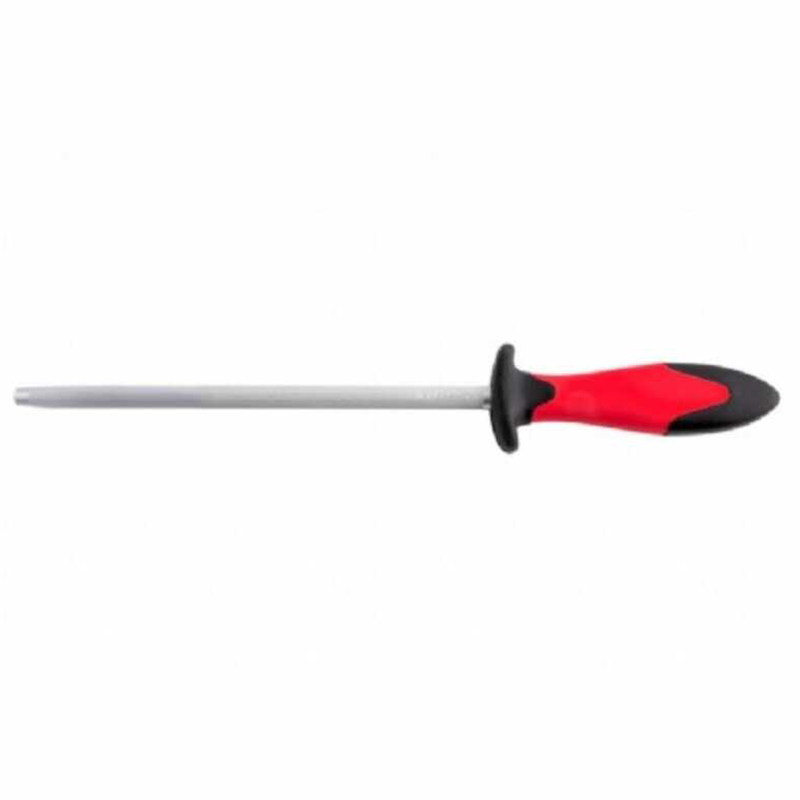
Fıscher Luna Sharpener, Red, Slot 8, S1130R, 20 Cm
Product Code : 8102100209
%0
656
TL
656
TL
546
TL + VAT
Out Of Stock
Notify me when its in stock
Payment Options

ProductFeatures
Material
Steel
Fıscher Luna Sharpener, Red, Slot 8, S1130R, 20 Cm
- The handle is made of plastic and is specially designed for both right and left-handed users.
- The handle has a special hand guard for your safety.
- Made from special high carbon steel alloyed with chromium, manganese, and silicon.
- Coated with a layer of hard chrome 8 to 10 microns thick providing protection against corrosion.
- The surface hardness of the edges increases between 3 to 4 HRC thanks to this layer.
- Magnetization feature holds steel particles within.
- Does not leave any scratch marks on your knife.
- Excluding the handle, it measures a total of 20 cm 8' in length.
NOTE:
- If the thickness of the sharpening edge, i.e., the blade edge, has become very thick, it should be thinned to between 0.4 and 0.6 mm.
- If the knife overheats during sharpening, it changes the structure of the steel, reducing its corrosion resistance and blade hardness. This may result in losing the edge retention ability of your knife.
- The sharpening process should be applied flawlessly from root to tip, forming a fine wire burr on the edge of the blade. - To finish the sharpening process, this fine wire/burr formed on the cutting edge must be removed.
- If the burr formed on the edge is not removed carefully, the cutting precision and resistance to dulling of your knife may be significantly impaired.
- The knife surface should have a straight cutting line, and a serrated or jagged edge may cause the knife to break.
- Knives should not be exposed to high corrosion-inducing substances like saltwater for extended periods.
GÜVENLİ ALIŞVERİŞ
Satın alma işlemleriniz
3D Secure ile güvendedir.
3D Secure ile güvendedir.
5000 TL ve ÜZERİ ÜCRETSİZ KARGO
Tüm alışverişlerinizde geçerli
5000 TL ve üzeri ücretsiz kargo.
5000 TL ve üzeri ücretsiz kargo.
9 TAKSİT İMKANI
Kredi kartlarında geçerli 9 taksitli
alışveriş imkanı.
alışveriş imkanı.
KURULUM VE DESTEK
Müşteri destek ekibimizle tüm
siparişlerinizde yanınızdayız.
siparişlerinizde yanınızdayız.